

Last Updated on: 19th July 2026, 02:34 pm
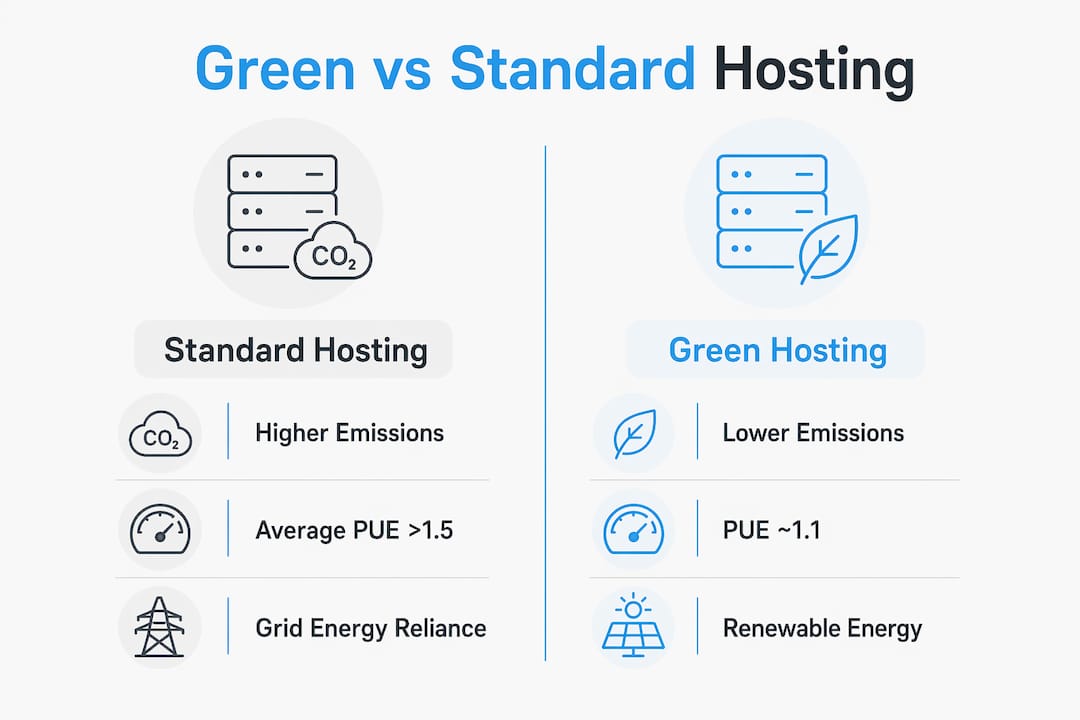
Green web hosting is defined as the practice of powering web servers and data center infrastructure entirely or predominantly with renewable energy sources, such as wind, solar, or hydropower. The advantages of green web hosting extend well beyond environmental goodwill. Switching to a verified green host reduces hosting emissions by approximately 24.3% under the SWDM v4 carbon calculation model, and in some scenarios cuts estimated CO2 per page view from 1.45g down to 0.12g with additional optimizations. For eco-conscious website owners and digital entrepreneurs, that combination of measurable environmental impact, stronger brand trust, and modern infrastructure performance makes green hosting one of the highest-leverage decisions you can make for your digital presence.
What are the advantages of green web hosting for carbon reduction?
Green web hosting is ranked the most effective consumer-level strategy for reducing ICT sector carbon footprints in a 2026 peer-reviewed study. That finding matters because it places your hosting choice above device upgrades, streaming habits, and other behavioral adjustments in terms of measurable climate impact.
The mechanism is straightforward. Every page view your website serves requires electricity. When that electricity comes from coal or natural gas, each visit carries a carbon cost. When it comes from verified renewable sources, that cost drops dramatically. The SWDM v4 model applies a green factor of 0.243 to verified green hosts, meaning roughly a quarter of hosting-related emissions are eliminated immediately upon switching. Providers like Hetzner, which sources power through direct hydropower contracts and Power Purchase Agreements (PPAs), represent the gold standard here.
Not all green claims are equal, though. There are three main energy sourcing tiers worth understanding:
- Direct renewable generation: On-site solar panels or wind turbines powering the data center directly. This is the most credible option.
- Power Purchase Agreements (PPAs): Long-term contracts with renewable energy producers that guarantee a specific volume of clean electricity. Providers like Hetzner use this model with rigorous certification.
- Renewable Energy Certificates (RECs): Tradeable certificates representing one megawatt-hour of renewable electricity. These are common but weaker, since the actual electrons powering your server may still come from fossil fuels.
Data center efficiency compounds these benefits. The metric used to measure this is Power Usage Effectiveness, or PUE. A PUE of 1.0 is perfect efficiency; every watt goes to computing. The global average PUE was 1.58 in 2024, meaning 58% extra energy is consumed just on cooling and overhead. Hyperscale providers achieve PUE scores of 1.1 to 1.2, which significantly reduces total electricity demand before renewable sourcing even enters the equation.
| Hosting type | Estimated CO2 per page view |
|---|---|
| US average grid host | ~1.45g |
| REC-verified green host | ~0.38g |
| Direct renewable + optimized | ~0.12g |
Pro Tip: When evaluating a green host, ask for both their PUE score and their energy procurement method. A low PUE combined with direct PPAs or on-site renewables delivers far greater real-world carbon savings than a high-PUE facility running on RECs.
What certifications verify that a green hosting provider is legitimate?
Greenwashing is a genuine problem in the hosting industry. Many providers slap “eco-friendly” on their marketing without any auditable proof. The Green Web Foundation operates the most credible independent verification program available, and understanding how it works helps you separate real green hosts from marketing noise.
To earn Green Web Foundation certification, a hosting provider must meet specific disclosure requirements:
- Annual fossil-free energy disclosure: Providers must document that 100% of their energy procurement comes from fossil-free sources each year. Carbon offsets do not count. This is a firm boundary in the certification criteria.
- Commitment to hourly fossil-free energy by 2030: Annual matching is the current baseline, but the Green Web Foundation requires providers to commit to hourly matching, meaning renewable generation aligns with actual consumption hour by hour, not just annually on paper.
- Auditable procurement methods: Acceptable methods include self-generation (on-site renewables), direct procurement contracts, green tariffs from utilities, and bundled certificates. Unbundled RECs are accepted but flagged as the weakest form of evidence.
The practical implication is significant. A provider that purchases carbon offsets to claim “carbon neutrality” does not qualify for Green Web Foundation verification. Offsets compensate for emissions elsewhere rather than eliminating them at the source. Verified green hosting means the electricity powering your website is genuinely fossil-free, not just balanced on a spreadsheet.
You can check any domain’s green hosting status directly through the Green Web Foundation’s free lookup tool. Type in a domain and it returns a pass or fail based on the provider’s certification status. This takes about 30 seconds and removes any guesswork.
Pro Tip: Before signing up with any host claiming green credentials, run their domain through the Green Web Foundation checker. If they don’t appear in the database, ask them directly which disclosure method they use and request documentation. A legitimate provider will answer without hesitation.
How does green hosting improve website performance and brand reputation?
The benefits of eco-friendly hosting are not limited to carbon reduction. Modern green data centers tend to be newer facilities built with energy efficiency as a design priority. That translates directly into better hardware, more reliable cooling systems, and faster server response times for your website visitors.

Providers that invest in low-PUE infrastructure are also investing in the kind of reliable data center design that reduces outages and improves uptime. Efficient cooling prevents hardware overheating, which is one of the leading causes of unexpected downtime. For a business website or e-commerce store, that reliability has direct revenue implications.
On the brand side, the numbers are clear. Research on sustainable web design shows that green hosting disclosure and sustainability seals positively impact brand perception and purchase intentions. Customers who see a Green Web Badge or a sustainability statement on your website are more likely to trust your brand and complete a purchase. This is particularly relevant for businesses targeting environmentally aware consumers, but the effect extends broadly across demographics as sustainability becomes a mainstream expectation.
Here is what the sustainable web hosting benefits look like in practice for your brand:
- Green Web Badges: Automatically displayed on certified domains, these give visitors an immediate, credible signal of your environmental commitment without requiring you to write a single word of copy.
How to Add the Green Web Badge to Your Website (Step-by-Step)
- Sustainability pages: A dedicated page explaining your hosting choice, energy sourcing, and carbon reduction numbers builds deeper trust with customers who research before buying.
- SEO credibility: Transparent sustainability practices contribute to the kind of brand trust signals that search engines increasingly factor into authority assessments.
- Competitive differentiation: In crowded markets, a verified green hosting credential is a concrete, auditable differentiator that competitors cannot fake without the same infrastructure investment.
The combination of operational reliability and brand trust makes green hosting a practical business decision, not just an ethical one.
How to switch to green hosting and communicate it effectively
Switching to a verified green host is a straightforward process, but doing it well requires a few deliberate steps to maximize both the environmental and business benefits.
- Verify your current host’s status. Use the Green Web Foundation’s free domain checker to see whether your existing provider is already certified. If they are, you may already be benefiting from green hosting without knowing it.
- Identify verified green providers. Look for hosts that appear in the Green Web Foundation database and can provide documentation of their energy procurement method. Providers like GreenGeeks are well-known examples with publicly available sustainability credentials. You can read a detailed breakdown in Digi Host Guide’s GreenGeeks review if you want a practical starting point.
| Provider | Primary Energy Method | PUE Score | Best For |
| Hetzner | Direct Hydropower & PPAs | ~1.1 – 1.2 | European projects, VPS, Dedicated servers |
| GreenGeeks | 300% REC Matching (Green-e) | ~1.25 | Beginners, WordPress, Shared hosting |
| Kinsta | Google Cloud Platform (PPAs/Match) | ~1.1 | Demanding managed WordPress, E-commerce |
| ScPrime | Decentralized Storage (Web3) | less than 1.05 | Secure, distributed data storage |
3.Compare PUE and energy sourcing. Don’t evaluate green credentials in isolation. A host with a PUE of 1.15 and direct PPAs delivers more real-world impact than one with a PUE of 1.8 running on unbundled RECs.
4. Migrate your website. Most green hosts offer free migration services. The technical process is identical to any standard host switch: transfer files, update DNS records, and test your site before canceling the old account.
5. Display your green credentials. Once you are on a verified host, add a Green Web Badge to your footer or about page. Some certifications, including those verified through the Green Web Foundation’s automatic domain verification, display the badge based on your domain’s IP resolution without requiring any code changes on your end.
6. Combine with sustainable web design. Green hosting is one part of a broader digital sustainability strategy. Optimizing image sizes, reducing unnecessary scripts, and choosing efficient themes compound the carbon savings your hosting choice delivers.
Pro Tip: When you publish a sustainability page explaining your green hosting choice, include the specific provider name, their Green Web Foundation certification status, and the energy sourcing method they use. Vague claims like “we care about the environment” build no trust. Specific, verifiable facts do.
Key takeaways
Switching to a verified green host is one of the highest-leverage actions a digital entrepreneur can take to reduce ICT greenhouse gas emissions, combining measurable carbon savings with real business advantages.
| Point | Details |
|---|---|
| Carbon reduction is quantifiable | Verified green hosting reduces hosting emissions by approximately 24.3% under the SWDM v4 model. |
| Not all green claims are equal | Direct PPAs and on-site renewables are far more credible than unbundled RECs or carbon offsets. |
| Certification requires auditable proof | Green Web Foundation verification demands annual fossil-free energy disclosures, not marketing statements. |
| Performance and reliability improve | Low-PUE data centers reduce hardware stress and outages, directly benefiting your site’s uptime. |
| Brand trust is a measurable outcome | Sustainability seals and green hosting disclosure positively impact customer purchase intentions. |
Why verified credentials matter more than marketing labels
One thing has become clear to me while researching web hosting providers: green hosting is one of the easiest areas for marketing claims to outpace reality. Terms like carbon neutral and eco-friendly appear on countless hosting websites, yet many providers offer little or no independently verifiable evidence to support those claims. That distinction matters because genuine environmental commitment is very different from good marketing.
Whenever I evaluate a hosting provider’s sustainability claims, I start with the Green Web Foundation database. It takes less than a minute to verify whether a provider has documented renewable energy sourcing or other recognised environmental credentials. If a company is not listed, it is worth asking how they support their claims. Providers that are genuinely committed to sustainability are usually happy to share clear documentation, while others often respond with broad promises and polished marketing materials instead of verifiable evidence.
Another point that deserves more attention is the connection between sustainability and performance. Data centres designed to use energy more efficiently are typically built on newer infrastructure, which often translates into better uptime, faster servers, and greater reliability. In practice, choosing a verified green hosting provider rarely means compromising on performance. More often than not, you benefit from both.
There is also a long-term business advantage to making the switch sooner rather than later. Sustainability is becoming increasingly important for customers, regulators, and business partners alike. Establishing verified green credentials today can strengthen your brand, build trust with environmentally conscious visitors, and put you ahead of competitors that postpone the transition until it becomes a necessity.
— Peter
FAQ
What is green web hosting?
Green web hosting is the practice of powering web servers with renewable energy sources such as wind, solar, or hydropower. Verified providers document their energy procurement through programs like the Green Web Foundation rather than relying on carbon offsets.
How much does green hosting reduce carbon emissions?
Under the SWDM v4 formula, switching to a verified green host applies a green factor of 0.243, reducing hosting-related CO2 emissions by approximately 24.3%. With additional site optimizations, estimated emissions per page view can drop from 1.45g to as low as 0.12g.
Are carbon offsets enough to qualify as green hosting?
No. The Green Web Foundation’s certification criteria explicitly exclude carbon offsets. Only auditable fossil-free energy procurement methods, such as direct renewables, PPAs, or green tariffs, qualify for verified green hosting status.
How do I check if my hosting provider is certified green?
Use the Green Web Foundation’s free domain lookup tool to check any provider’s certification status in seconds. If your provider does not appear, ask them directly for their energy disclosure documentation.
Can switching to green hosting improve my website’s speed?
Yes, but indirectly. Green hosting itself does not automatically make your code run faster. However, modern green data centers with low PUE (Power Usage Effectiveness) scores are built using the latest energy-efficient processors and advanced cooling systems. Because they rely on newer infrastructure, these facilities naturally deliver faster server response times and greater uptime reliability compared to older, legacy data centers.
Does green hosting cost more than standard hosting?
Green hosting prices are broadly comparable to standard shared and managed hosting plans. Providers like GreenGeeks offer plans at competitive rates, and the operational efficiencies of modern low-PUE data centers often offset higher energy costs at the infrastructure level.
